- Have any questions?
- Office: +1 (650) 345-8510
- Mobile: +1 (650) 576-6916
- norm@traveltechnology.com

Convergence
Smartphone Market Share Influences Download versus Mobile Web Debate
August 18, 2009Global View
October 1, 2009 The pace of mobile convergence continues to accelerate. A camera is now a common feature on mobile phones. Smartphones have gone further with integration of PDA and MP3 player functionality. Tom Tom is now available as an downloadable application on the iPhone signaling the convergence of Personal Navigation Devices (PNDs) with smartphones. Gaming is already immensely popular on smartphones cutting into the portable gaming market. Mobile payments are still limited to specific regions of the world. In Japan, mobile payments have been a standard feature for some time and mobile micro payments for public transportation is emerging especially in developing countries.
“Accord ing to Inside Facebook, the social network is working with mobile payments provider Zong on a test allowing a small number of users to sample the mobile payment option in its virtual gift shop“. Social networking is already a major activity on smartphones so Facebook’s test with Zong is a significant development towards the mobile wallet.
So what does this all mean for the travel industry? The bottom line is this: labeling the device in the frequent travelers’ pocket as a phone is not only naive but misses the true opportunity for innovation that can enhance the travel experience.
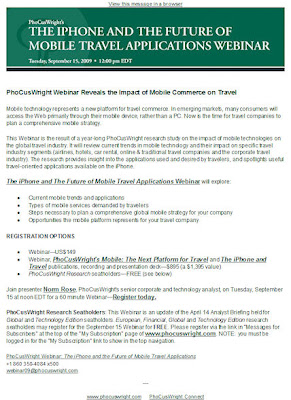
If you want to learn more, please join me next week for a Webinar through PhoCusWright. Details are below.